While practically anyone can launch an email marketing campaign, avoiding critical execution errors is what separates high-converting campaigns from wasted budgets. After all, your goal is to maximize your return on investment (ROI).
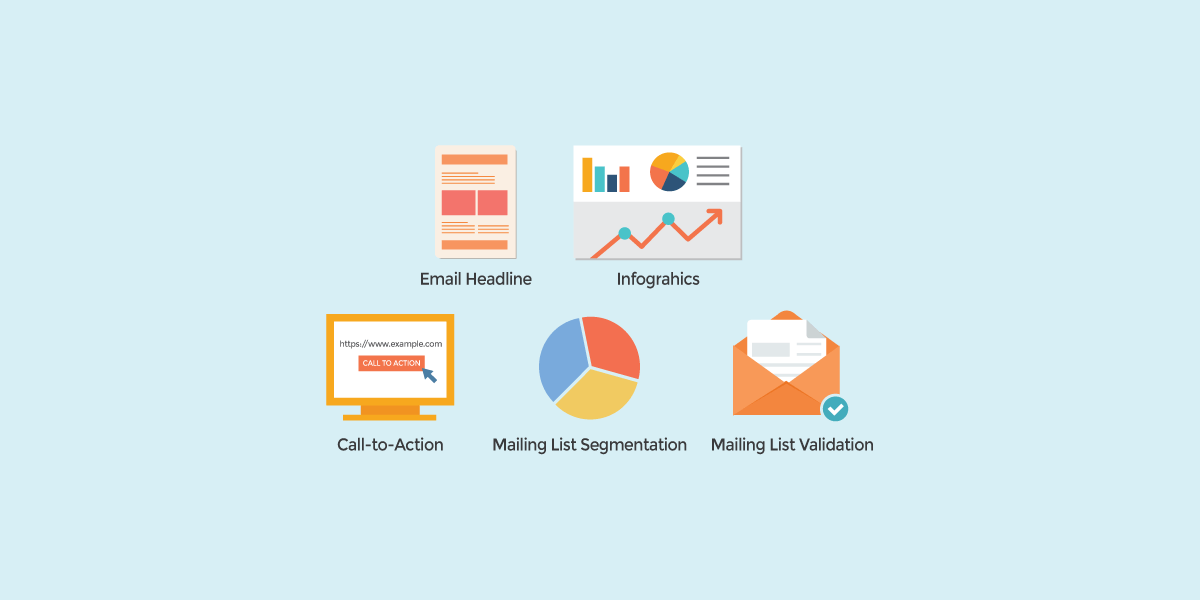
To ensure your messages don’t get lost in the noise, you need to understand the structural levers that drive engagement. This article breaks down five foundational pillars of email marketing and how optimizing them will dramatically increase your open and click-through rates (CTR).
Crafting a High-Converting Subject Line (The Gatekeeper) #
When scanning a crowded inbox, recipients make a split-second decision to read, trash, or save an email based entirely on the subject line. In a world where professionals receive hundreds of daily emails, an uninspired headline ensures your message goes unnoticed.
The Strategy:
Keep subject lines punchy, descriptive, and under 50 characters to prevent them from being truncated on mobile devices.
Resourceful Tip:
Utilize A/B testing on your headlines to see what resonates. Incorporate curiosity gaps, urgency, or personal elements (like the recipient’s first name) to boost open rates, and pair them with a compelling preview text to act as a secondary hook.
Using Infographics and Rich Visuals (The Content Engine) #
When it comes to explaining complex product features, services, or data, a picture truly paints a thousand words. Long walls of text cause cognitive fatigue, causing readers to abandon your email before they ever reach your links.
The Strategy:
Embed high-quality product images, screenshots, or flowcharts that visually guide the reader through your value proposition.
Resourceful Tip:
Always optimize your image file sizes to prevent slow loading times, which hurt the user experience. Crucially, add descriptive ALT text to every image—if a recipient’s mail client blocks image loading by default, your context and value proposition will still be readable.
Designing Frictionless Calls-to-Action (The Conversion Driver) #
A Call-to-Action (CTA) is the bridge between an interested reader and a website visitor. Without a clear, prominent command, readers will simply close your email without taking the next step.
The Strategy:
Move away from hyperlinked text like “click here.” Instead, deploy a high-contrast, bulletproof HTML button that clearly states the benefit of clicking (e.g., “Get Your Free Trial” or “Explore the Dashboard”).
Resourceful Tip:
Use a single, primary CTA per email to avoid distracting your audience. Design-wise, ensure the button is surrounded by ample whitespace and is large enough to be easily tapped on a mobile screen.
Implementing Mailing List Segmentation (The Relevance Filter) #
A massive, unsegmented mailing list is incredibly inefficient. A single, generic broadcast sent to your entire audience will inevitably alienate subscribers who find the topic irrelevant to their specific business needs or interests.
The Strategy:
Divide your list into distinct segments based on user behavior, geographic location, industry, or past purchase history.
Resourceful Tip:
Tailor your email copy to speak directly to the pain points of each segment. For instance, send developer-centric documentation to your technical users while offering high-level ROI case studies to your executive-level contacts.
Prioritizing Regular List Validation (The Infrastructure Shield) #
Over time, every mailing list suffers from natural data decay. Subscribers change jobs, abandon old free accounts, or make typos during sign-up. If left unmanaged, inactive addresses turn into disabled accounts or, worse, recycled spam traps that can ruin your sender reputation.
The Strategy:
If you notice your open rates dipping or your bounce rates climbing, it is a clear sign your database needs maintenance. Clean data protects your IP and domain authority across major Internet Service Providers (ISPs).
Resourceful Tip:
Regularly run your database through a dedicated verification platform like MailboxValidator. Cleaning your list removes stale emails and hazardous spam traps, ensuring your marketing spend is only deployed toward active, valid recipients who can actually convert.
A successful email marketing strategy isn’t just about hitting “send”—it relies on a balanced combination of engaging copy, thoughtful design, clean data, and audience relevance. By implementing these five optimization strategies, you can minimize deliverability pitfalls, maximize your CTR, and build a highly responsive subscriber base that drives consistent business growth.